Weather Alert in Alaska
Winter Storm Watch issued March 2 at 5:52AM AKST until March 4 at 3:00AM AKST by NWS Juneau AK
AREAS AFFECTED: City and Borough of Sitka; Western Kupreanof and Kuiu Island
DESCRIPTION: ...MULTIPLE ROUNDS OF SNOWFALL EXPECTED THROUGH EARLY WEEK... Snow continues for the central inner channels from Wrangell and Kake northward though rates are starting to diminish. Prince of Wales Island mainly has rain at coastal communities, but inland areas of the island are seeing snow. Expect the precip to continue to diminish through the morning as the system moves off to the east Monday. Another system will bring more accumulating snow to the panhandle Monday night into Tuesday night. The track of this follow up feature could lead to significant swings in snow accumulations from Frederick Sound northward to the Icy Strait corridor. * WHAT...For the Winter Weather Advisory, snow. Additional snow accumulations of up to one inch. For the Winter Storm Watch, heavy snow possible. Total snow accumulations of 4 to 12 inches possible. Winds could gust as high as 35 mph. * WHERE...City and Borough of Sitka and Western Kupreanof Island and Kuiu Island. * WHEN...For the Winter Weather Advisory, until 9 AM AKST Monday. For the Winter Storm Watch, from late Monday night through late Tuesday night. * IMPACTS...Travel could be very difficult and is discouraged. The hazardous conditions could impact the morning or evening commute. * ADDITIONAL DETAILS...For the winter weather advisory, Snow is starting to diminish in intensity and should continue to diminish through the morning. For the winter storm watch, the arctic boundary over the panhandle is expected to continue to linger around Frederick Sound Monday into Tuesday. An approaching system will bring a fresh influx of moisture and moderate to heavy snow, with a quicker transition to a rain snow mix for the outer coast depending upon the track of the low.
INSTRUCTION: Slow down and use caution while traveling. Monitor the latest forecasts for updates on this situation. People are urged to prepare their property before the onset of winter weather. For the latest road conditions, where available, call 5 1 1 or visit 511.alaska.gov.
Want more detail? Get the Complete 7 Day and Night Detailed Forecast!
Current U.S. National Radar--Current
The Current National Weather Radar is shown below with a UTC Time (subtract 5 hours from UTC to get Eastern Time).

National Weather Forecast--Current
The Current National Weather Forecast and National Weather Map are shown below.

National Weather Forecast for Tomorrow
Tomorrow National Weather Forecast and Tomorrow National Weather Map are show below.

North America Water Vapor (Moisture)
This map shows recent moisture content over North America. Bright and colored areas show high moisture (ie, clouds); brown indicates very little moisture present; black indicates no moisture.

Weather Topic: What are Shelf Clouds?
Home - Education - Cloud Types - Shelf Clouds
 Next Topic: Sleet
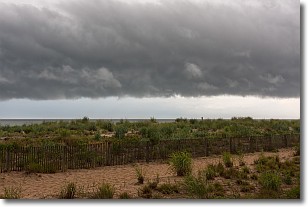
A shelf cloud is similar to a wall cloud, but forms at the front
of a storm cloud, instead of at the rear, where wall clouds form.
A shelf cloud is caused by a series of events set into motion by the advancing
storm; first, cool air settles along the ground where precipitation has just fallen.
As the cool air is brought in, the warmer air is displaced, and rises above it,
because it is less dense. When the warmer air reaches the bottom of the storm cloud,
it begins to cool again, and the resulting condensation is a visible shelf cloud.
Next Topic: Sleet
Weather Topic: What is Snow?
Home - Education - Precipitation - Snow
 Next Topic: Stratocumulus Clouds
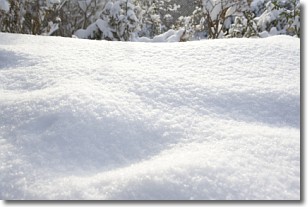
Snow is precipitation taking the form of ice crystals. Each ice crystal, or snowflake,
has unique characteristics, but all of them grow in a hexagonal structure.
Snowfall can last for sustained periods of time and result in significant buildup
of snow on the ground.
On the earth's surface, snow starts out light and powdery, but as it begins to melt
it tends to become more granular, producing small bits of ice which have the consistency of
sand. After several cycles of melting and freezing, snow can become very dense
and ice-like, commonly known as snow pack.
Next Topic: Stratocumulus Clouds
Current conditions powered by WeatherAPI.com