Weather Alert in Kansas
Fire Weather Watch issued March 20 at 12:18PM CDT until March 22 at 7:00PM CDT by NWS Topeka KS
AREAS AFFECTED: Republic; Washington; Marshall; Nemaha; Brown; Cloud; Clay; Riley; Pottawatomie; Jackson; Jefferson; Ottawa; Dickinson; Geary; Morris; Wabaunsee; Shawnee; Douglas; Lyon; Osage; Franklin; Coffey; Anderson
DESCRIPTION: ...RED FLAG WARNING IN EFFECT FROM SATURDAY MORNING THROUGH SATURDAY EVENING...FIRE WEATHER WATCH IN EFFECT FROM SATURDAY NIGHT THROUGH SUNDAY EVENING... * AFFECTED AREA...Fire Weather Zone 008 Republic, Fire Weather Zone 009 Washington, Fire Weather Zone 010 Marshall, Fire Weather Zone 011 Nemaha, Fire Weather Zone 012 Brown, Fire Weather Zone 020 Cloud, Fire Weather Zone 021 Clay, Fire Weather Zone 022 Riley, Fire Weather Zone 023 Pottawatomie, Fire Weather Zone 024 Jackson, Fire Weather Zone 026 Jefferson, Fire Weather Zone 034 Ottawa, Fire Weather Zone 035 Dickinson, Fire Weather Zone 036 Geary, Fire Weather Zone 037 Morris, Fire Weather Zone 038 Wabaunsee, Fire Weather Zone 039 Shawnee, Fire Weather Zone 040 Douglas, Fire Weather Zone 054 Lyon, Fire Weather Zone 055 Osage, Fire Weather Zone 056 Franklin, Fire Weather Zone 058 Coffey and Fire Weather Zone 059 Anderson. * TIMING...For the Red Flag Warning, from 11 AM to 10 PM CDT Saturday. For the Fire Weather Watch, from Saturday evening through Sunday evening. * WINDS...Southwest 15 to 25 mph with gusts up to 40 mph. * RELATIVE HUMIDITY...As low as 15 percent. * TEMPERATURES...Up to 93. * IMPACTS...Any fire that develops will catch and spread quickly. Outdoor burning is not recommended.
INSTRUCTION: A Red Flag Warning means that critical fire weather conditions are either occurring now, or will shortly. A combination of strong winds, low relative humidity, and warm temperatures can contribute to extreme fire behavior. A Fire Weather Watch means that critical fire weather conditions are forecast to occur. Listen for later forecasts and possible Red Flag Warnings.
Want more detail? Get the Complete 7 Day and Night Detailed Forecast!
Current U.S. National Radar--Current
The Current National Weather Radar is shown below with a UTC Time (subtract 5 hours from UTC to get Eastern Time).

National Weather Forecast--Current
The Current National Weather Forecast and National Weather Map are shown below.

National Weather Forecast for Tomorrow
Tomorrow National Weather Forecast and Tomorrow National Weather Map are show below.

North America Water Vapor (Moisture)
This map shows recent moisture content over North America. Bright and colored areas show high moisture (ie, clouds); brown indicates very little moisture present; black indicates no moisture.

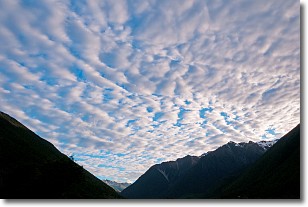
Weather Topic: What are Stratus Clouds?
Home - Education - Cloud Types - Stratus Clouds
 Next Topic: Wall Clouds
Stratus clouds are similar to altostratus clouds, but form at a
lower altitude and are identified by their fog-like appearance, lacking the
distinguishing features of most clouds.
Stratus clouds are wider than most clouds, and their base has a smooth, uniform
look which is lighter in color than a nimbostratus cloud.
The presence of a stratus cloud indicates the possibility of minor precipitation,
such as drizzle, but heavier precipitation does not typically arrive in the form
of a stratus cloud.
Next Topic: Wall Clouds
Weather Topic: What are Altocumulus Clouds?
Home - Education - Cloud Types - Altocumulus Clouds
 Next Topic: Altostratus Clouds
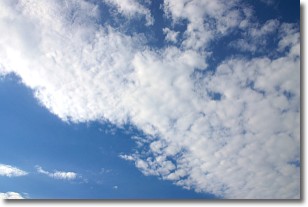
Similar to cirrocumulus clouds, altocumulus clouds are
characterized by cloud patches. They are distinguished by larger cloudlets
than cirrocumulus clouds but are still smaller than stratocumulus clouds.
Altocumulus clouds most commonly form in middle altitudes (between 2 and 5 km)
and may resemble, at times, the shape of a flying saucer.
These uncommon formations, called altocumulus lenticularis, are created by uplift
in the atmosphere and are most often seen in close proximity to mountains.
Next Topic: Altostratus Clouds
Current conditions powered by WeatherAPI.com