Weather Alert in Alaska
Winter Weather Advisory issued March 18 at 9:41PM AKDT until March 20 at 4:00AM AKDT by NWS Juneau AK
AREAS AFFECTED: Municipality of Skagway; Haines Borough and Klukwan; Glacier Bay; Eastern Chichagof Island; City and Borough of Sitka; Admiralty Island; Petersburg Borough
DESCRIPTION: ...HIT OR MISS SNOW SHOWERS CONTINUE THROUGH THE WEEK... .Snow showers from the Gulf of Alaska will continue through Friday morning at least. Snowfall accumulations of 6 to 14 inches are expected through Friday, with some locally higher amounts possible. A steadier band of snow has set up near Juneau this evening, with 1 inch per hour snowfall rates. A short fused Winter Storm Warning has been issued for Juneau through Wednesday night. A more organized area of showers is expected to impact the NE gulf coast on Thursday bringing more intense snow falls which has prompted the addition of winter storm warnings for Yakutat and Pelican. However, accumulations will be limited during the daytime due to warmer temperatures as we are now into the latter half of March. In addition, snowfall accumulations will be widely variable across the area due to the hit or miss nature of the showers, however rates as high as 1 inch per hour and visibilities down to 1/2 mile or less will be possible within any heavier showers that repeatedly move over the same location. Advisories could be upgraded to short-fuse Winter Storm Warnings if heavier snow showers continue over the same area. A relative lull in the heaviest showers is likely for some areas on Friday, but more snow may sweep into the panhandle for the weekend. * WHAT...Snow. Additional snow accumulations of 4 to 10 inches. Visibilities reduced to 1 mile or less at times. * WHERE...Portions of Southeast Alaska. * WHEN...Until 4 AM AKDT Friday. * IMPACTS...Travel could be difficult. The hazardous conditions could impact the morning or evening commute. * ADDITIONAL DETAILS...Heaviest snow showers are expected during the day Thursday. Snow amounts could be highly variable with the higher amounts near the outer coast and near higher terrain. Skagway and the Klondike highway could see gusty winds to 40 mph Thursday afternoon with possible blowing snow on the Klondike highway.
INSTRUCTION: Slow down and use caution while traveling. People are urged to prepare their property before the onset of winter weather. For the latest road conditions, where available, call 5 1 1 or visit 511.alaska.gov.
Want more detail? Get the Complete 7 Day and Night Detailed Forecast!
Current U.S. National Radar--Current
The Current National Weather Radar is shown below with a UTC Time (subtract 5 hours from UTC to get Eastern Time).

National Weather Forecast--Current
The Current National Weather Forecast and National Weather Map are shown below.

National Weather Forecast for Tomorrow
Tomorrow National Weather Forecast and Tomorrow National Weather Map are show below.

North America Water Vapor (Moisture)
This map shows recent moisture content over North America. Bright and colored areas show high moisture (ie, clouds); brown indicates very little moisture present; black indicates no moisture.

Weather Topic: What are Cirrocumulus Clouds?
Home - Education - Cloud Types - Cirrocumulus Clouds
 Next Topic: Cirrostratus Clouds
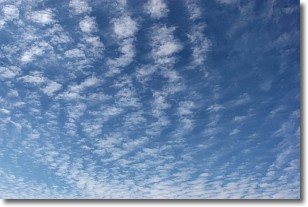
Cirrocumulus clouds form at high altitudes (usually around 5 km)
and have distinguishing characteristics displayed in a fine layer of
small cloud patches. These small cloud patches are sometimes referred to as
"cloudlets" in relation to the whole cloud formation.
Cirrocumulus clouds are formed from ice crystals and water droplets. Often, the
water droplets in the cloud freeze into ice crystals and the cloud becomes a
cirrostratus cloud. Because of this common occurrence, cirrocumulus cloud
formations generally pass rapidly.
Next Topic: Cirrostratus Clouds
Weather Topic: What are Cirrus Clouds?
Home - Education - Cloud Types - Cirrus Clouds
 Next Topic: Condensation
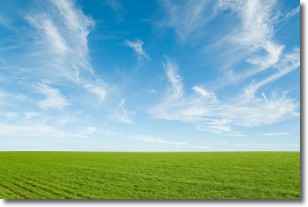
Cirrus clouds are high-level clouds that occur above 20,000 feet
and are composed mainly of ice crystals.
They are thin and wispy in appearance.
What do they indicate?
They are often the first sign of an approaching storm.
Next Topic: Condensation
Current conditions powered by WeatherAPI.com